
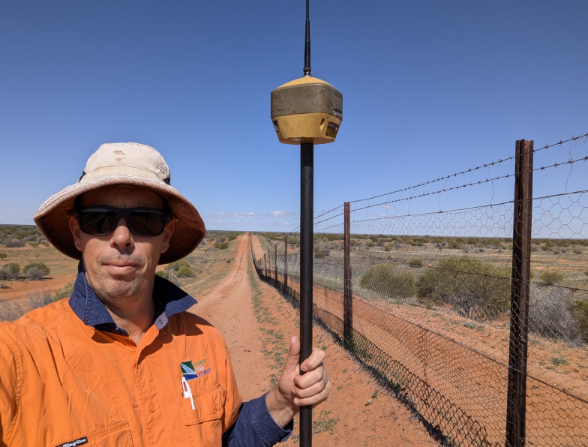
In our ‘day in the life’ blog series, we aim to showcase the work of our talented team and help you get to know the faces behind our projects a little better. This month, we sat down with Andrew Roberts, a Surveyor in our Northern Rivers office, to chat a bit more about the dynamics of his role and his best advice for anyone considering a career in the field.
Tell us a bit about yourself and what interested you in Surveying.
I am in my mid to late 40s, married with two teenage kids. I live in the best part of New South Wales, the Northern Rivers, a place where people go on their holidays. I am old enough to remember Byron Bay before it became popular. Surveying is my second career. My first career was in the New South Wales Police Force, where I specialised in Crash Investigation. I investigated fatal and serious injury motor vehicle crashes. It got to a point where I needed to do something else for my own sanity, so I retrained as a Surveyor.
What does a typical workday look like for you, and what brings you the most enjoyment in your role?
A typical workday for me involves driving 20 minutes from home to the office to collect survey equipment, then heading to a job site either solo or with an assistant. The job site might be a construction site, which may require multiple visits over the life of the project or a small-scale job such as a contour and detail survey or a boundary remark.
I enjoy the factual nature of surveying and the ability to measure vast distances with high accuracy and precision. It is enjoyable for me to be able to collect data with technology such as drones, laser scanners, total stations and GPS equipment, and be able to provide that data to clients in a usable format, whether it is digital data or a PDF plan and for a decision to be made from my data.
It is enjoyable to be involved in a project from start to finish and tell my kids, “I helped build that.” To date, I have helped build a couple of Bunnings, an Aldi, a highway – preconstruction land acquisition, construction and post-construction remark, numerous houses, a bridge, a couple of fire stations, TAFE, a hospital ward, a Marine Rescue tower and a couple of Waste Management Facility Cells.
What’s it like being part of Barker Ryan Stewart’s Survey team? Are there any standout projects you’re currently working on?
Working in the Barker Ryan Stewart Survey Team has allowed me to think of the business side of things. My previous employment hasn’t had an emphasis on field staff doing fee proposal work, as that was handled by one person in the office.
What’s been the most memorable aspect of working at Barker Ryan Stewart so far?
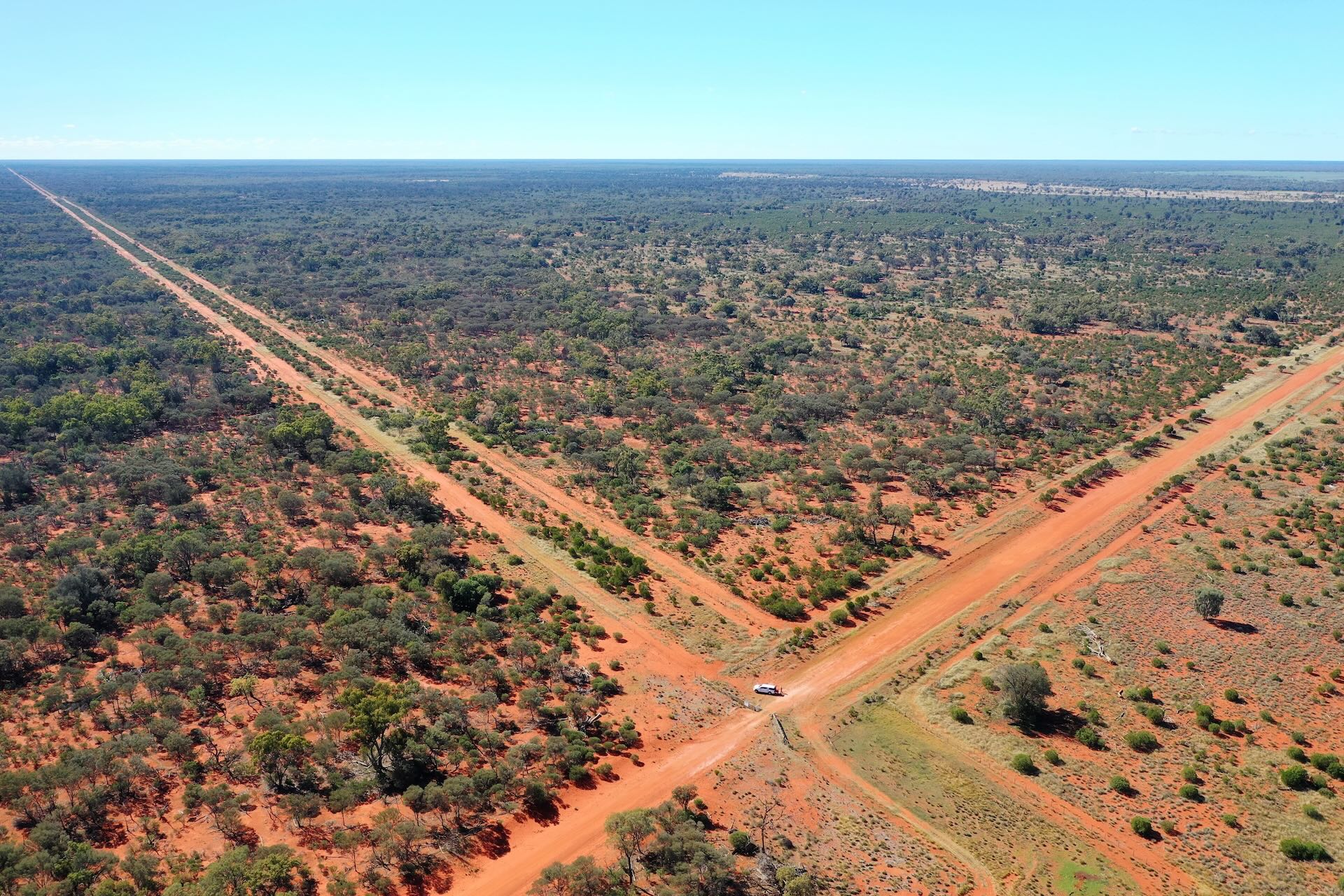
The most memorable aspect of working at Barker Ryan Stewart was travelling to outback New South Wales to do Lease Surveys for a telecommunications company. Some of the boundaries surveyed were 10km plus long. One of the boundary lines surveyed was the dingo fence on the New South Wales/South Australia border (photo attached). It gave me an appreciation of the surveyors from the late 1800s who surveyed boundary lines with chains and theodolites and travelled the vastness of the outback on horseback.
Being able to experience the outback with my mate and colleague Ossie Welsh made it all the more memorable as we both have a keen interest in photography.
Looking back at your career, is there anything that has surprised you about working in Surveying?
I am surprised at how fast surveying technology is evolving. I started working in this field 12 years ago. In that time, surveying has benefited from the implementation of affordable GNSS technology, laser scanning and drone technology. These technologies have improved productivity and the quality of products we can provide to our clients.
Finally, what advice do you have for anyone considering a career in Surveying?
I would suggest that anyone considering a career in surveying contact their local surveying company and do some work experience. Surprisingly, not everyone enjoys going bush, being hot and sweaty, or encountering ticks, leeches, and snakes, however, I much prefer that environment to being behind a desk.
